
Product overview
Collects data through native CAN buses and uses X2View for browser-based monitoring and supervisory integration. CAN ports are distinct from RS485 serial ports.
Selection and reading guide
- Acquisition covers all serial and Ethernet protocols in the reviewed list. Existing explicit support for CAN is retained.
- Acquisition covers all serial and Ethernet protocols in the reviewed list. Existing explicit support for CAN is retained. Similar names do not imply the same client/server role or serial transport.
- For supervisory integration, first check the forwarding interfaces—BACnet, Modbus, MQTT, OPC UA—then check this model’s communication roles and configuration steps.
- Check the field point list against the communication capacity of 512 points and 64 devices; count physical terminals separately from communication points.
Model document guide
- File unavailable in this language; purpose and functions: page 3; specification references: pages 2
Native bus ports and wiring
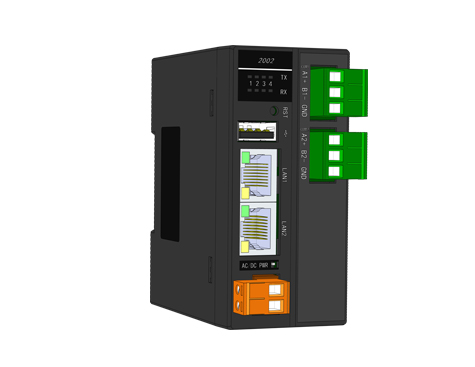
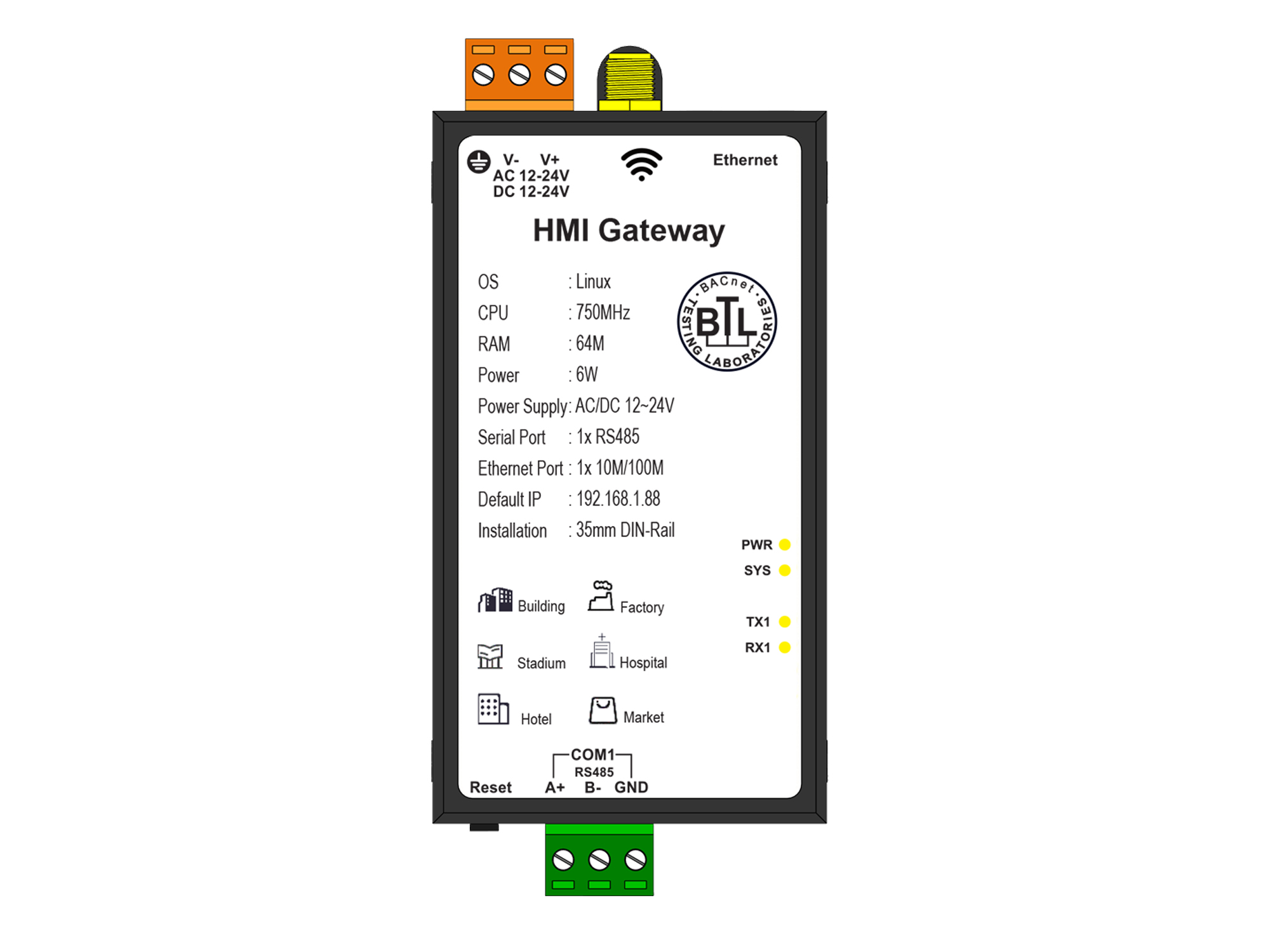
1 Ethernet port and 2 native CAN bus ports. CAN ports are counted separately and must not be treated as 2 RS485 serial ports. Undocumented RS485/RS232 quantities remain unconfirmed.
Wiring references (Chinese PDFs): File unavailable in this language (pp. 4)
Current product specifications
Specifications are sourced from the supplied 2026 product catalog. Unspecified values remain unconfirmed.
| Parameter | Specification |
|---|---|
| Ethernet ports | 1 |
| Point capacity | 512 |
| Device capacity | 64 |
| Acquisition protocols | All serial and Ethernet protocols in the reviewed list; existing explicit support for CAN is retained |
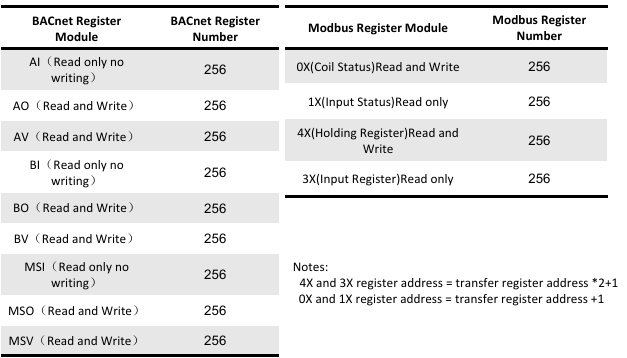
| Forwarding protocols | BACnet / Modbus / MQTT / Database / OPC UA |
| Physical interfaces | Ethernet |
| HMI visualization | Supported |
The serial/Ethernet acquisition scope above follows the model confirmation on 2026-10-02. Existing explicit protocol support and specialized interfaces are retained; verify actual hardware interfaces and communication roles separately.
Model datasheets
- File unavailable in this language